Quick Answer
Call tracking software for small business is a platform that assigns a unique phone number to each ad source, logs every inbound call to that source, and records the conversation so an owner can see which ads actually ring the phone and which waste the budget. It turns a blind marketing spend into a measurable, attributable pipeline that can be optimized.
Key Takeaways
- Call tracking software assigns a unique phone number to each ad or campaign, then logs and records every inbound call to that number so you can attribute each call to the ad that produced it.
- It shows which ads produce calls and which waste money, so you reallocate budget to the channels that ring the phone.
- Only if you put a tracking number on your website's NAP listings.
- Yes.
- Standalone call tracking runs $30 to $150 per month plus per-number and per-minute fees.
Definition
Call tracking software assigns a unique phone number to each ad or campaign, then logs and records every inbound call to that number so you can attribute each call to the ad that produced it.
Call tracking software for small business is a platform that assigns a unique phone number to each ad source, logs every inbound call to that source, and records the conversation so an owner can see which ads actually ring the phone and which waste the budget. It turns a blind marketing spend into a measurable, attributable pipeline that can be optimized.
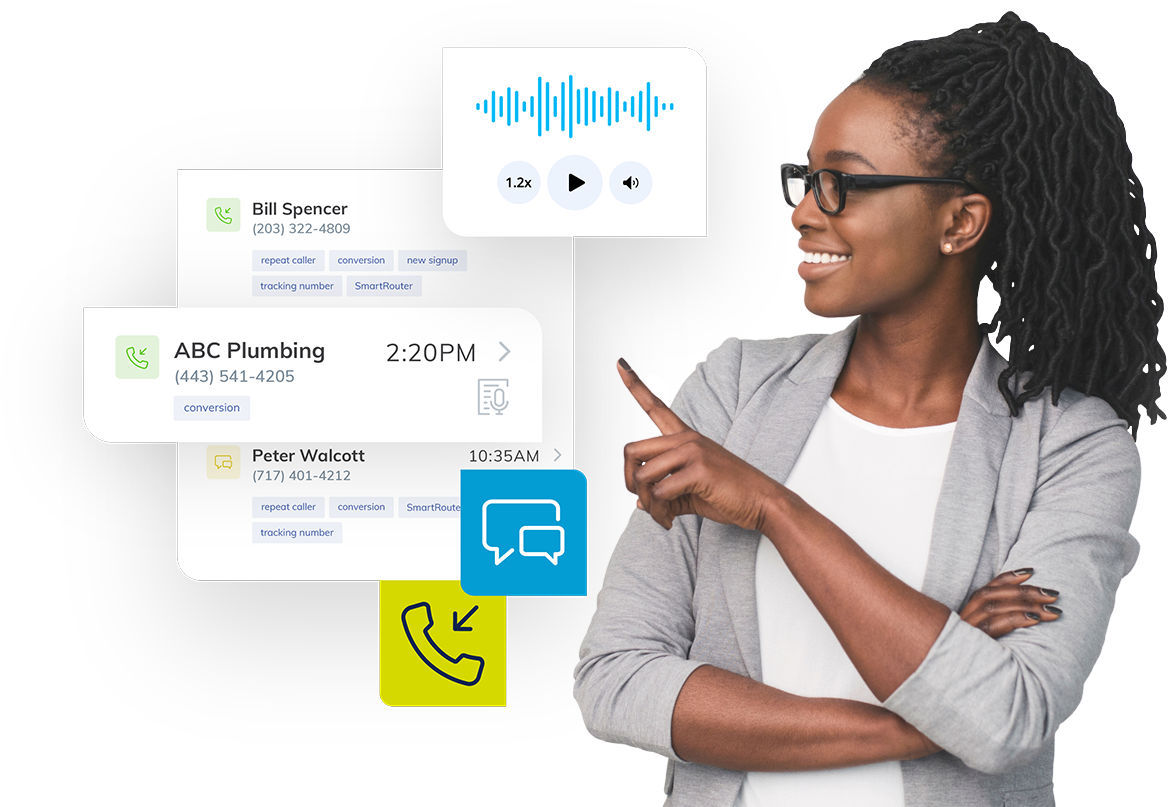
The blind-budget problem call tracking solves
Most small businesses run ads across Google, Facebook, and directories but cannot tell which spend produces a phone call, so they keep paying for channels that never ring. Call tracking assigns a unique number to each source and logs every call, turning ad spend into attributable revenue.
A contractor I worked with was spending $3,200 a month across Google Ads, Facebook, and a local directory. The phone rang, but nobody could say which ad made it ring. When we put tracking numbers on each source, we found the directory produced almost nothing and one Google campaign produced 70% of the booked jobs. We cut the directory, doubled the winning campaign, and booked more jobs for less money. That is the entire point of marketing attribution: tracking which ads actually work.
How call tracking actually works
Each ad source gets a unique tracking number that forwards to your main line. When a call lands, the software logs the source, the caller's number, the time, and records the conversation, then syncs that record into your CRM so every call is attributed and searchable.
| Layer | What it does | Why it matters |
|---|---|---|
| Tracking number | A unique phone number placed on each ad source | Tells you exactly which ad the caller saw |
| Call routing | Forwards the call to your main business line instantly | The caller never knows it is a tracking number |
| Call recording | Records the conversation with consent | Lets you audit quality and train the team |
| Source attribution | Tags the call with the campaign, keyword, or channel | Makes ad spend measurable down to the call |
| CRM sync | Creates a contact record tied to the source | Turns a call into an attributable, follow-up-able lead |
Where to put tracking numbers (and where not to)
Tracking numbers belong on paid ads, landing pages, and specific campaigns, never on your Google Business Profile or website NAP. Mixing a tracking number into your local listings splits your NAP consistency and drags down your Map Pack rank.
The most common mistake is slapping a tracking number on the Google Business Profile to count calls. That number is now your public NAP, and it does not match the number on your website or your directory citations, which confuses Google's local algorithm and hurts your Google Maps ranking. Keep your real business number on every public listing, and use tracking numbers only on ad creative, paid landing pages, and campaign-specific links.
Static vs dynamic call tracking
Static tracking gives one number per channel. Dynamic number insertion swaps the number on your site based on where the visitor came from, attributing the call to the exact keyword or campaign that drove the visit, which is the level of detail that actually optimizes ad spend.
- Static tracking: one number per channel, simple, good for print and fixed ads.
- Dynamic number insertion: swaps the number per visitor source, attributes to keyword, best for paid search.
- Session-level attribution: tracks the visitor's full path, not just the last click, so repeat visitors still attribute correctly.
- Recording with consent: stores the call so you can audit quality and train whoever answers.
Setting up dynamic insertion and attribution correctly is engineering work, which is why an expert AI automation engineer configures the tracking, routing, and CRM sync so every call attributes to its source and feeds back into the pipeline automatically. Contractors running paid ads should also read our Google Ads for contractors cost-per-lead guide to see how tracking pairs with pay-per-lead ad types.
Building call tracking into an owned CRM
When call tracking lives inside your CRM, every call becomes a contact record with a source tag, a recording, and a follow-up sequence, so the data you pay for actually compounds instead of sitting in a separate dashboard nobody opens.
- 1Place a tracking number on each paid ad source and landing page.
- 2Forward every call to your main line and record with consent.
- 3Sync each call into your CRM as a contact tagged with its source.
- 4Fire an automated text-back if the call goes unanswered, so the lead is not lost.
- 5Review the source report monthly and reallocate budget to the channels that ring.
That last step, the automated text-back when a call is missed, is what stops tracked calls from leaking. See how it works in missed-call text-back for contractors. When you want tracking wired into your CRM with the attribution and follow-up built in, book a free setup audit.
This is one piece of the owned marketing engine model, where each rented tool, from call tracking to the CRM to the automations, is rebuilt as part of one owned system for a single one-time build fee.
Key takeaways
- Call tracking assigns a unique number to each ad source and logs every call, making ad spend attributable.
- It cuts cost per acquired customer 20–30% by killing spend on channels that never ring.
- Tracking numbers belong on ads and landing pages, never on your Google Business Profile or NAP.
- Dynamic number insertion attributes calls to the exact keyword or campaign that drove the visit.
- Inside an owned CRM, every call becomes a tagged, follow-up-able contact record for about $48/month.

Marjohn Robillo— AI Automation Engineer & Lead AI Consultant
Marjohn Robillo is the AI Automation Engineer and Lead AI Consultant at Apehx Digital, architecting speed-to-lead, conversational text-back, and AI-qualification systems for US service businesses. Portfolio & consulting: marjohnrobillo.me.
See more of Marjohn's workFrequently Asked Questions
What is call tracking software?
Call tracking software assigns a unique phone number to each ad or campaign, then logs and records every inbound call to that number so you can attribute each call to the ad that produced it. It turns call volume into measurable marketing data.
How does call tracking help a small business?
It shows which ads produce calls and which waste money, so you reallocate budget to the channels that ring the phone. Without it, you spend blind, paying for impressions and clicks that never convert to a conversation.
Does call tracking hurt local SEO?
Only if you put a tracking number on your website's NAP listings. Use your real business number on your Google Business Profile and website, and reserve tracking numbers for paid ads, landing pages, and specific campaigns.
Is call tracking included in a CRM?
Yes. An all-in-one CRM includes call tracking, recording, and attribution alongside the CRM, automations, and booking, for about $48/month. Standalone tools charge separately and require a connector to sync call data back to your records.
How much does call tracking software cost?
Standalone call tracking runs $30 to $150 per month plus per-number and per-minute fees. Inside an all-in-one CRM, it is included at roughly $48/month with the rest of the marketing stack, making it the cheaper path once you need CRM plus tracking together.
More from the blog
Related guides in the same topic cluster.