Quick Answer
To rank on Google Maps in 2026, a local business must optimize six ranking signals: a complete and accurate Google Business Profile, consistent NAP citations, a steady flow of new reviews, proximity to the searcher, on-site local relevance, and engagement signals like calls and direction requests. The Map Pack captures about 44% of local clicks, so ranking in the top three is where the traffic is.
Key Takeaways
- Optimize the six ranking signals: complete your Google Business Profile, keep NAP citations consistent, build a steady flow of new reviews, stay relevant by proximity, add local content on your site, and drive engagement through calls and direction requests.
- The Map Pack is the top three local business results shown above organic search on a local query.
- Very.
- Yes.
- You can automate the inputs: a review-request engine that drives steady review velocity, and engagement-driving automations like call and direction prompts.
Definition
The Map Pack is the top three local business results shown above organic search on a local query.
To rank on Google Maps in 2026, a local business must optimize six ranking signals: a complete and accurate Google Business Profile, consistent NAP citations, a steady flow of new reviews, proximity to the searcher, on-site local relevance, and engagement signals like calls and direction requests. The Map Pack captures about 44% of local clicks, so ranking in the top three is where the traffic is.
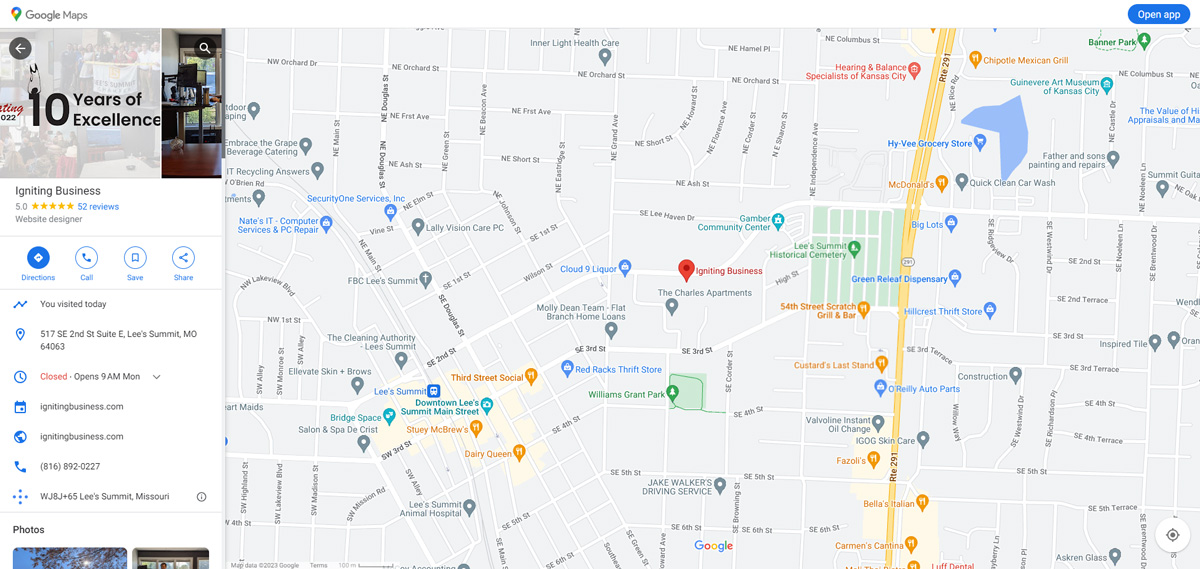
The Map Pack is where the traffic actually is
The Map Pack, the top three local results above organic search, captures about 44% of local clicks, so ranking there matters far more than page-one organic. The six signals that move you into the top three are profile, NAP, reviews, proximity, on-site relevance, and engagement.
Most local businesses spend on SEO that targets organic rankings while ignoring the Map Pack, which is where a near-me search actually lands. When a homeowner searches 'roofer near me,' they do not scroll to the organic results; they look at the three pins at the top and call one of them. If you are not in the top three, you are invisible to that search. The path in is not a secret algorithm; it is six measurable signals, and most businesses get at least three of them wrong. This is the same owned-assets argument we make in Google Business Profile optimization for the Map Pack: the listing is an asset you control.
The six ranking signals, in order of leverage
The six signals are a complete Google Business Profile, consistent NAP citations across the web, a steady flow of new reviews, proximity to the searcher, on-site local relevance, and engagement signals like calls and direction requests. Review velocity and profile completeness are the two you can move fastest.
| Signal | What it means | How to move it |
|---|---|---|
| Profile | A complete, accurate, claimed Google Business Profile | Fill every field, add photos, post weekly updates |
| NAP | Consistent name, address, phone across the web | Match every citation and directory to your exact NAP |
| Reviews | A steady flow of new, recent reviews | Automate review requests at peak satisfaction |
| Proximity | Distance from the searcher to your business | Optimize for your service area, not the whole city |
| On-site relevance | Local content and keywords on your website | City and service in titles, embedded map, local pages |
| Engagement | Calls, direction requests, and website clicks from the listing | Make call and directions one-tap and prompt them in campaigns |
Review velocity is the signal most businesses miss
Review velocity, the steady flow of new reviews, matters more than total review count. A business with 200 old reviews and no new ones ranks below a competitor with 60 reviews but a fresh stream this month, because Google weights recency as a trust signal.
This is the signal you can automate. A review-request engine that fires at peak satisfaction, after a five-star outcome or a successful job, produces a steady stream of recent reviews without anyone remembering to ask. That stream is what moves you up the Map Pack over time, and it is the same engine we detail in how to get more Google reviews and Google reviews automation for local SEO. The businesses that win the Map Pack are not the ones with the most reviews; they are the ones with the most recent reviews.
NAP consistency is boring and it quietly kills your rank
Inconsistent name, address, and phone across directories confuses Google's local algorithm and drags down your Map Pack rank. Audit every citation, your website footer, and your profiles to make sure the NAP is identical everywhere, including suite numbers and formatting.
- Match your NAP exactly across Google Business Profile, your website, and every directory.
- Decide on a format (Suite vs Ste, Road vs Rd) and use it identically everywhere.
- Audit citations annually and correct any drift, especially after a move or rebrand.
- Never put a tracking number on your Google Business Profile; use your real business number.
- Keep your website footer NAP text-based, not an image, so crawlers can read it.
Wiring the review engine, NAP audit, and engagement automations is engineering work, which is why an expert AI automation engineer builds the review-request flows and call-tracking safeguards that feed the right signals to Google without breaking NAP consistency. The call-tracking safeguard matters because a tracking number on the listing is the most common NAP mistake, covered in our call tracking software guide.
The 2026 Google Maps ranking checklist
Run this checklist: complete and claim your profile, audit NAP across every citation, automate a steady review-request flow, optimize your service-area pages for proximity, add local content to your site, and drive engagement with one-tap calls and directions. Move review velocity first; it is the fastest lever.
- 1Complete and claim your Google Business Profile with every field and weekly posts.
- 2Audit NAP across your website, profile, and every directory for exact consistency.
- 3Automate review requests at peak satisfaction for a steady flow of recent reviews.
- 4Create service-area and city pages for proximity relevance.
- 5Add local content, your city and service in titles, and an embedded map on your site.
- 6Make call and directions one-tap from the listing and prompt them in campaigns.
When you want the review engine and engagement automations wired into your owned CRM, book a free setup audit and we will map the six signals to your actual market.
This is one piece of the owned marketing engine model, where each rented tool, from the review engine to the local SEO stack to the CRM, is rebuilt as part of one owned system for a single one-time build fee.
Key takeaways
- The Map Pack captures about 44% of local clicks, so ranking in the top three is where the traffic is.
- The six signals are profile, NAP, review velocity, proximity, on-site relevance, and engagement.
- Review velocity, a steady flow of recent reviews, matters more than total review count.
- NAP consistency across every directory is boring but quietly protects your rank.
- Never put a tracking number on your Google Business Profile; it breaks NAP consistency.

Marjohn Robillo— AI Automation Engineer & Lead AI Consultant
Marjohn Robillo is the AI Automation Engineer and Lead AI Consultant at Apehx Digital, architecting speed-to-lead, conversational text-back, and AI-qualification systems for US service businesses. Portfolio & consulting: marjohnrobillo.me.
See more of Marjohn's workFrequently Asked Questions
How do I rank higher on Google Maps in 2026?
Optimize the six ranking signals: complete your Google Business Profile, keep NAP citations consistent, build a steady flow of new reviews, stay relevant by proximity, add local content on your site, and drive engagement through calls and direction requests.
What is the Google Maps Map Pack?
The Map Pack is the top three local business results shown above organic search on a local query. It captures about 44% of local clicks, so ranking in the top three is where the visibility and traffic actually are.
How important are reviews for Google Maps ranking?
Very. Review velocity, the steady flow of new reviews, is one of the six ranking signals. A business with 50 old reviews and no new ones ranks below a competitor with a fresh, steady stream of recent reviews.
Does my website affect Google Maps ranking?
Yes. On-site relevance is a signal. Pages with local keywords, your city and service in the title, embedded map, and locally relevant content strengthen the connection between your site and your map listing.
Can I automate Google Maps ranking?
You can automate the inputs: a review-request engine that drives steady review velocity, and engagement-driving automations like call and direction prompts. The ranking itself is Google's algorithm, but the signals it reads can be automated.
More from the blog
Related guides in the same topic cluster.