Quick Answer
SMS vs email marketing in 2026 is not a choice between the two; it is a division of labor. SMS open rates exceed 95% and are read within minutes, so SMS wins time-sensitive conversion like speed-to-lead and reminders. Email carries more context at a far lower cost per message, so email wins nurture and content. The winning strategy uses both in one owned CRM, each for what it does best.
Key Takeaways
- It depends on the goal.
- SMS open rates exceed 95% with most texts read within three minutes, versus email open rates around 20%.
- Both, in a division of labor.
- Per message, SMS costs more than email, but its conversion rate is far higher for time-sensitive actions.
- Yes.
Definition
SMS open rates exceed 95% with most texts read within three minutes, versus email open rates around 20%.
SMS vs email marketing in 2026 is not a choice between the two; it is a division of labor. SMS open rates exceed 95% and are read within minutes, so SMS wins time-sensitive conversion like speed-to-lead and reminders. Email carries more context at a far lower cost per message, so email wins nurture and content. The winning strategy uses both in one owned CRM, each for what it does best.
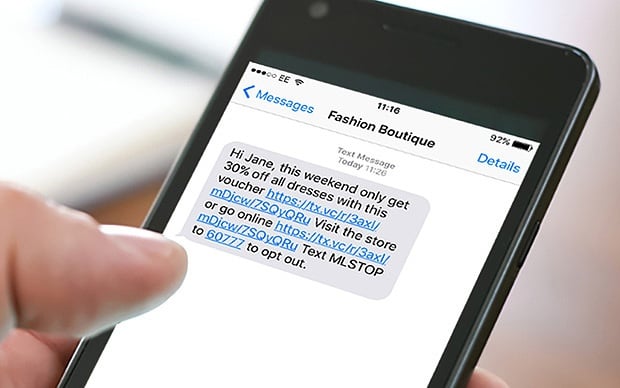
It is not a competition; it is a division of labor
The SMS vs email debate is the wrong question. SMS wins time-sensitive conversion with open rates above 95%, and email wins nurture and context at a fraction of the cost per message. The strategy that converts best uses both, each for what it does best, in one owned CRM.
Businesses keep asking which channel to pick, and the answer is neither alone. A lead who submits a form at 10pm needs a text in 15 seconds, not an email that lands in the morning. A dormant customer list needs a nurture email that carries a story and an offer, not a 160-character text. Each channel has a job, and the businesses that convert best run both from one CRM so the lead gets the right channel at the right moment. This is the same multi-channel principle behind our SMS marketing automation for small business guide.
Where SMS wins
SMS wins wherever time is the variable: speed-to-lead follow-up, appointment reminders, reactivation offers, and review requests. The 95% open rate and three-minute read window mean the message is seen while intent is still high.
| Use case | Why SMS wins | Example |
|---|---|---|
| Speed-to-lead | Read in under 3 minutes, catches intent | Instant text-back on a form or missed call |
| Appointment reminders | One-tap confirm, cuts no-shows | Reminder 24 hours and 1 hour before |
| Reactivation | Two-way win-back conversation | Text past customers with a comeback offer |
| Review requests | One-tap link, high completion | Send a review link at peak satisfaction |
Where email wins
Email wins wherever context or cost is the variable: nurture sequences, content, broad reactivation broadcasts, and newsletters. Email carries more information per message and costs a fraction of SMS at scale, which is why it owns the nurture and content side.
- Nurture sequences: multi-step drips that build trust over days and weeks.
- Content and education: longer messages that carry a story and an offer.
- Broad reactivation: a broadcast to a large dormant list at near-zero cost per message.
- Newsletters: regular touchpoints that keep the brand top of mind.
- Receipts and documents: detailed records that need more than 160 characters.
Email's deliverability is also a technical layer you must own; a beautiful nurture sequence is worthless if it lands in spam. That setup is in our email deliverability guide, and the nurture design in email drip campaign automation. Building both channels into one owned pipeline is engineering work, which is why an expert AI automation engineer wires the SMS and email triggers from the same CRM so each fires at the right moment.
The winning combined strategy
The winning strategy uses SMS for the time-sensitive moments and email for the nurture and context, both running from one CRM so every contact has a unified history. A lead gets a text for speed-to-lead, an email for nurture, a text for the reminder, and an email for the reactivation broadcast.
- 1Fire an instant SMS text-back on every new lead for speed-to-lead.
- 2Enroll the lead in an email nurture sequence for context and trust.
- 3Send an SMS reminder for appointments with a one-tap confirm.
- 4Run an email broadcast for broad reactivation at near-zero cost.
- 5Log every SMS and email to the same contact record for a unified history.
When you want SMS and email running together in one owned CRM with the triggers and sequences built in, book a free setup audit and we will map the channels to your funnel.
This is one piece of the owned marketing engine model, where each rented tool, from the SMS platform to the email engine to the CRM, is rebuilt as part of one owned system for a single one-time build fee.
Key takeaways
- SMS open rates exceed 95% and win time-sensitive conversion; email wins nurture and context.
- Use SMS for speed-to-lead, reminders, reactivation, and review requests.
- Use email for nurture, content, broad broadcasts, and detailed records.
- The winning strategy uses both in one CRM, each for what it does best.
- Inside an owned CRM, both channels run from one contact record for about $48/month.

Criselle Julian— Project Manager
Criselle Julian is a Project Manager at Apehx Digital, leading CRM, automation, and data-ownership builds for US service businesses from scoping through launch.
See more of Criselle's workFrequently Asked Questions
Does SMS or email convert better in 2026?
It depends on the goal. SMS converts better for time-sensitive actions like speed-to-lead and appointment reminders because open rates exceed 95% and texts are read within minutes. Email converts better for nurture and content because it carries more context at a far lower cost per message.
What is the open rate of SMS vs email?
SMS open rates exceed 95% with most texts read within three minutes, versus email open rates around 20%. For immediacy, SMS wins; for depth and cost-efficiency at scale, email wins.
Should I use SMS or email for marketing?
Both, in a division of labor. Use SMS for time-sensitive conversion and reminders, and email for nurture, content, and reactivation at scale. Running both in one CRM lets each channel do what it does best without splitting your data.
Is SMS marketing more expensive than email?
Per message, SMS costs more than email, but its conversion rate is far higher for time-sensitive actions. Email is nearly free per message at scale, which makes it the cheaper channel for nurture and broad broadcasts.
Can SMS and email run from one CRM?
Yes. An all-in-one CRM runs both SMS and email from the same contact record, so a lead gets a text for speed-to-lead and an email for nurture, all logged in one place for about $48/month.
More from the blog
Related guides in the same topic cluster.