Quick Answer
Lead conversion statistics show that the average business converts only 2 to 5% of leads and 79% never convert at all. The three killers are slow response, weak follow-up, and poor qualification, and all three are fixable with automation: instant text-back collapses response time, nurture sequences sustain follow-up, and AI qualification screens out dead leads so effort goes where it converts.
Key Takeaways
- The average business converts 2 to 5% of leads, and 79% of leads never convert at all.
- Three reasons: slow response lets intent decay, weak follow-up drops leads after one attempt, and poor qualification wastes effort on leads that were never going to buy.
- Respond within 5 minutes with instant text-back, sustain follow-up with an automated nurture sequence, and qualify leads with AI so effort goes to leads with real intent.
- Most conversions happen between the 5th and 12th contact, yet most salespeople give up after one or two attempts.
- Yes, dramatically.
Definition
The average business converts 2 to 5% of leads, and 79% of leads never convert at all.
Lead conversion statistics show that the average business converts only 2 to 5% of leads and 79% never convert at all. The three killers are slow response, weak follow-up, and poor qualification, and all three are fixable with automation: instant text-back collapses response time, nurture sequences sustain follow-up, and AI qualification screens out dead leads so effort goes where it converts.
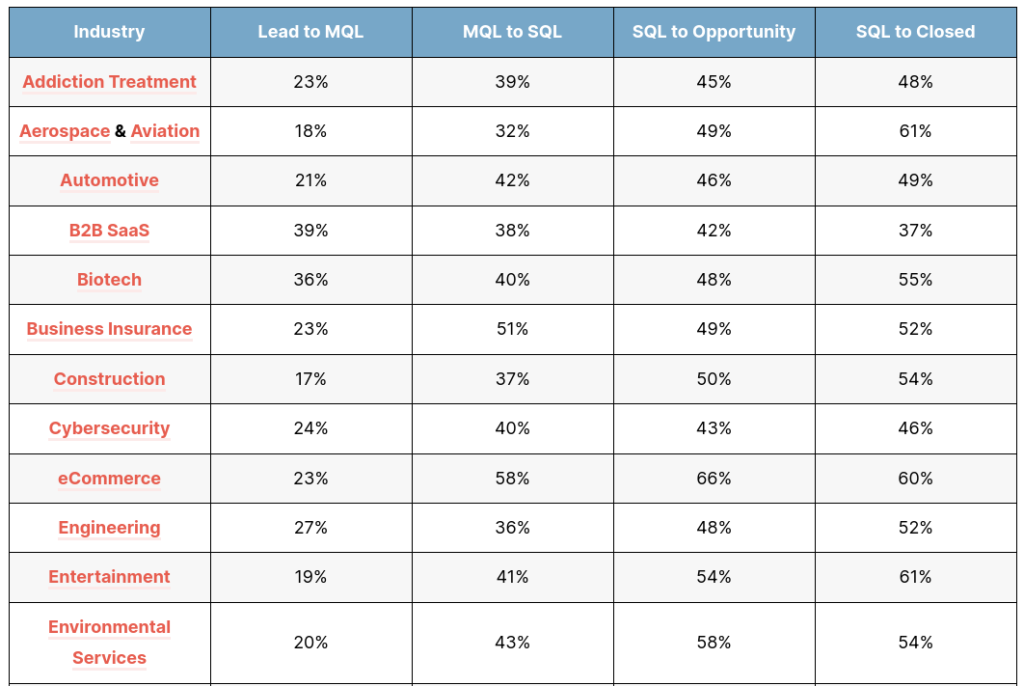
The 79% that never convert
The average business converts 2 to 5% of leads and 79% never convert at all, not because the leads are bad but because the business fails them in one of three ways: slow response, weak follow-up, or poor qualification. All three are mechanical failures, and all three are fixable with automation.
When a business owner sees a 2% conversion rate, they usually blame the leads. The data says otherwise. The leads are fine; the process fails them. A lead comes in, nobody responds for a day, one follow-up attempt is made, and if the lead does not answer, they are abandoned. That describes the majority of service businesses, and it explains why 79% of leads never convert. The leads were never given a chance. This is the same diagnosis we apply in lead nurturing automation sequence: the follow-up is the conversion.
The three killers of conversion
Slow response lets intent decay before the business replies, weak follow-up abandons leads after one attempt, and poor qualification wastes effort on leads that were never going to buy. Fix the three and the conversion rate moves from 2% toward the 10% range that good automation achieves.
| Killer | What happens | The fix |
|---|---|---|
| Slow response | Intent decays, lead books a competitor | Instant text-back in under 15 seconds |
| Weak follow-up | One attempt, then the lead is abandoned | Automated nurture sequence, 8 to 12 touches |
| Poor qualification | Effort wasted on leads that never buy | AI qualification scores and screens leads |
Why follow-up is where conversion actually happens
Most conversions happen between the 5th and 12th contact, yet most salespeople give up after one or two attempts. Automated nurture sequences sustain the contact count that actually converts, which is why follow-up, not the first response, is where the majority of conversions are won.
The first response catches the lead, but the follow-up closes them. A lead who does not answer the first call is not dead; they are busy. A nurture sequence that reaches out 8 to 12 times across text and email over a few weeks converts the leads that a one-and-done approach abandons. This is why the average business converts 2% while an automated one converts closer to 10%; the automation does the follow-up humans will not sustain. The full system is in our lead nurturing automation sequence guide, and the qualification layer in lead scoring CRM setup.
How automation fixes all three killers at once
Instant text-back fixes slow response, a nurture sequence fixes weak follow-up, and AI qualification fixes poor qualification. Together they address every reason 79% of leads never convert, moving the conversion rate from 2% toward the 10% range that a well-automated pipeline achieves.
- Instant text-back engages every lead in under 15 seconds, collapsing response time.
- An automated nurture sequence sustains 8 to 12 touches across text and email.
- AI qualification scores leads so effort goes to those with real intent.
- Call and form leads all route into the same CRM pipeline so nothing is lost.
- Booking links let qualified leads self-schedule, removing the manual bottleneck.
Wiring the response, nurture, and qualification into one pipeline is engineering work, which is why an expert AI automation engineer builds the text-back, sequence, and scoring logic so conversion is a system, not a hope. For businesses that want human help running the pipeline, you can also hire a Filipino virtual assistant to work the qualified leads the automation surfaces.
The conversion-fix checklist
Run this checklist: fire instant text-back on every lead, build a nurture sequence of 8 to 12 touches, add AI qualification to score and screen, route all leads into one CRM pipeline, and measure conversion weekly. Fix the three killers and the rate moves from 2% toward 10%.
- 1Fire instant text-back on every form and call lead in under 15 seconds.
- 2Build an automated nurture sequence of 8 to 12 touches across text and email.
- 3Add AI qualification to score leads and screen out the ones that will not buy.
- 4Route all leads into one CRM pipeline so nothing is lost between channels.
- 5Measure conversion rate weekly and keep the response time under 5 minutes.
When you want the three conversion killers fixed in one owned system, book a free setup audit and we will map it to your pipeline.
This is the core of the owned marketing engine model: every tool you currently rent, from the text-back engine to the nurture sequencer to the CRM, gets rebuilt as one system you own outright for a single one-time build fee.
Key takeaways
- The average business converts 2–5% of leads and 79% never convert at all.
- The three killers are slow response, weak follow-up, and poor qualification.
- Most conversions happen between the 5th and 12th contact, but most give up after one.
- Instant text-back, nurture sequences, and AI qualification fix all three killers.
- A well-automated pipeline converts closer to 10% versus the 2% average.

Marjohn Robillo— AI Automation Engineer & Lead AI Consultant
Marjohn Robillo is the AI Automation Engineer and Lead AI Consultant at Apehx Digital, architecting speed-to-lead, conversational text-back, and AI-qualification systems for US service businesses. Portfolio & consulting: marjohnrobillo.me.
See more of Marjohn's workFrequently Asked Questions
What is the average lead conversion rate in 2026?
The average business converts 2 to 5% of leads, and 79% of leads never convert at all. The rate varies by industry but the killers, slow response, weak follow-up, and poor qualification, are consistent across service businesses.
Why do 79% of leads never convert?
Three reasons: slow response lets intent decay, weak follow-up drops leads after one attempt, and poor qualification wastes effort on leads that were never going to buy. All three are fixable with automation.
How do I improve my lead conversion rate?
Respond within 5 minutes with instant text-back, sustain follow-up with an automated nurture sequence, and qualify leads with AI so effort goes to leads with real intent. Fixing the three killers is the fastest path to a higher conversion rate.
How many follow-up attempts does it take to convert a lead?
Most conversions happen between the 5th and 12th contact, yet most salespeople give up after one or two attempts. Automated nurture sequences sustain the contact count that actually converts without manual effort.
Does automation improve lead conversion?
Yes, dramatically. Instant text-back collapses response time, nurture sequences sustain follow-up, and AI qualification screens leads, addressing all three killers of conversion simultaneously and automatically.
More from the blog
Related guides in the same topic cluster.